Mold remediation in Florida
Mold assessment, removal and prevention after leaks and floods. A 24/7 line to reach a local company.
Mold can take hold quickly after a water leak in a Florida home. Here is what the EPA and CDC say, when you can clean a small patch yourself, and how Florida licenses mold work.
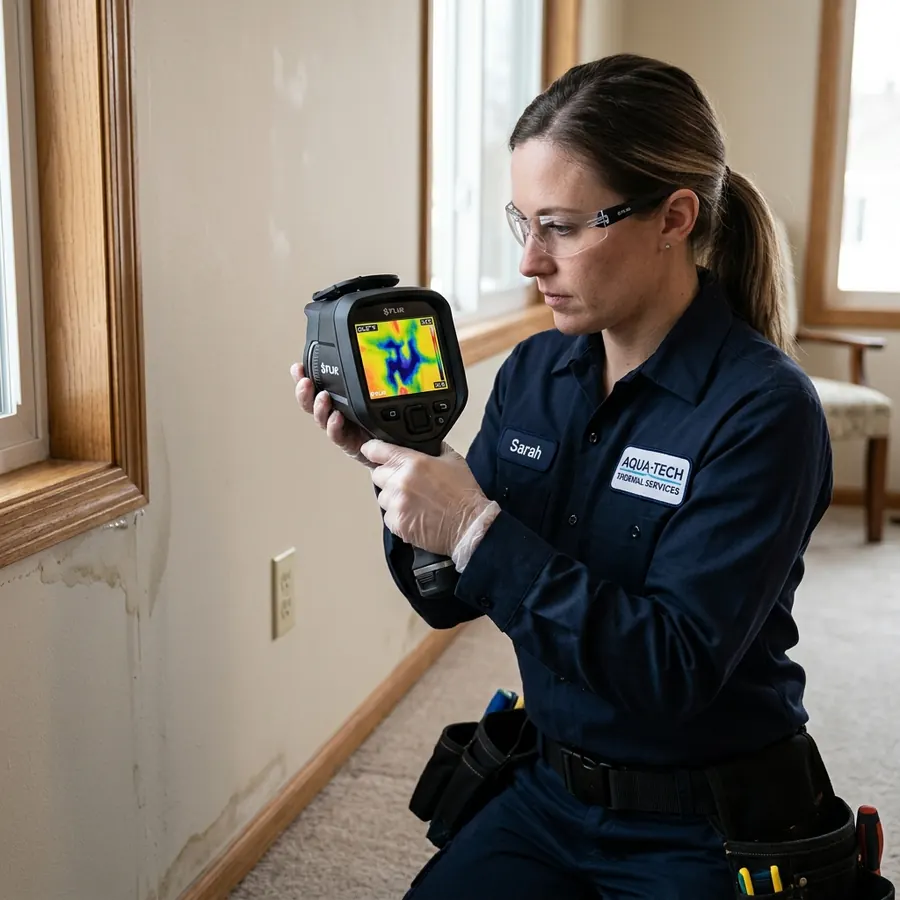
Why mold follows a leak so quickly
Mold needs moisture. The Florida Department of Health in St. Johns County says "Moisture that enters buildings from leaks or flooding accelerates mold growth" (DOH-St. Johns). The EPA says to dry water-damaged areas and items within 24 to 48 hours to prevent mold growth (EPA Brief Guide to Mold), so a slow drip behind a wall can become a mold problem before you notice it.
Humidity matters too. The EPA recommends indoor humidity below 60 percent, ideally 30 to 50 percent; the CDC says no higher than 50%, with air conditioners and dehumidifiers to help (CDC). A clogged AC condensate line can also cause a hidden leak; see AC drain overflow.
The first 48 hours after a leak
- Stop the water and dry all items completely (EPA, Mold Cleanup in Your Home). See our emergency steps.
- Take pictures of the home and your belongings and contact your insurer before cleanup (EPA Homeowner's and Renter's Guide).
- Dry fast. EPA lists fans, dehumidifiers, heaters and wet vacuums, and notes that wet carpet and pad must be pulled up to dry (EPA Mold Course, Ch. 4). See water extraction and structural drying.
- If mold is already growing, EPA says not to use fans, which may spread it, and not to run an HVAC system you suspect is contaminated.
Can you clean it yourself? EPA's 10-square-foot guideline
The EPA says that if the moldy area is less than about 10 square feet, in most cases you can handle the job yourself (EPA). Florida law lets a residential property owner do mold assessment and remediation on his or her own property (s. 468.841, Fla. Stat.). EPA's small-job guidance:
- Scrub hard surfaces with detergent and water, then dry completely.
- Porous materials such as ceiling tiles and carpet may have to be thrown away.
- Do not paint or caulk moldy surfaces.
- Bleach is not recommended as a routine practice; never mix it with ammonia cleaners (EPA).
- Wear gloves, goggles and an N-95 respirator (EPA Mold Course, Ch. 6).
When EPA says to call a professional
- Mold covers more than 10 square feet.
- The HVAC system or ductwork may be contaminated.
- The damage came from sewage or other contaminated water (see sewage backup cleanup).
- You have health concerns. EPA also says people with asthma or weakened immune systems should stay away from moldy sites, and children should not take part in disaster cleanup.
Health: what the CDC and EPA say
The CDC says damp, moldy environments may cause a variety of health effects, or none at all. Mold can cause a stuffy nose, sore throat, coughing or wheezing, burning eyes or a skin rash. People with asthma or mold allergies may have severe reactions, and people with weakened immune systems or chronic lung disease may get infections from mold (CDC, About Mold). If you have symptoms, talk with a doctor.
Do you need a mold test?
Usually not. The CDC does not recommend routine testing: if you see or smell mold, remove it. The EPA says sampling is unnecessary in most cases when mold is visible. The Florida Department of Health in Volusia County says there are no health or exposure-based standards for judging results, and recommends an AIHA/EMLAP-accredited lab if you do test (DOH-Volusia).
Florida's mold licensing law
Mold work is regulated under Part XVI of Chapter 468, Florida Statutes, and the Department of Business and Professional Regulation (DBPR) licenses mold assessors and mold remediators (DBPR).
- 10 square feet. The law defines mold assessment and mold remediation as work on mold growth greater than 10 square feet (s. 468.8411).
- Separate roles. An assessor may not remediate a structure it assessed within the last 12 months, and a remediator may not assess a structure it remediated within the last 12 months. Certified Division I contractors are exempt, though rules may require them to disclose your right to competitive bids. Assessors and remediators also may not pay or accept referral fees to or from each other (s. 468.8419).
- Insurance. Assessors must carry general liability and errors and omissions coverage of at least $1 million; remediators must carry at least $1,000,000 in general liability with specific coverage for mold-related claims (s. 468.8421).
- Rebuilding. A remediator can't do work that needs a Chapter 489 construction license unless licensed for it, so wall repairs may involve a separate contractor.
How to verify a mold license
- Ask for the license number of the assessor or remediator.
- Search the name or number on DBPR's Verify a License page or the DBPR mobile app (DBPR).
- Confirm the license type fits the job and is current. DBPR says these licenses expire July 31 of every even year.
- Check DBPR's disciplinary orders, or call its Customer Contact Center at (850) 487-1395.
What a professional remediation job usually involves
EPA tells homeowners to choose a contractor with mold experience, check references, and ask that the work follow EPA guidance or guidelines from groups such as IICRC or ACGIH (EPA). A typical job:
- Plan containment, protective gear, the moisture fix and safe removal (EPA, Ch. 4).
- Fix the moisture source.
- Contain the area. For about 10 to 100 square feet, EPA describes a single layer of 6-mil fire-retardant plastic sheeting with vents and doors sealed; over 100 square feet, double layers and an airlock. A fan exhausted outdoors keeps negative pressure so spores don't drift into clean rooms (EPA, Ch. 6).
- Remove porous materials such as moldy drywall, insulation and ceiling tiles, double-bagged in 6-mil plastic.
- Clean and HEPA-vacuum once materials are dry, then finish drying.
- Check the result. EPA's criteria: the moisture problem is fixed; no visible mold, mold-damaged materials or moldy odors; and no new signs on a revisit. Sampling usually isn't needed to judge success and must not replace a visual inspection (EPA, Ch. 7).
Insurance and mold in Florida
Many Florida homeowners policies cap mold coverage. A Florida Senate report says regulators began approving dollar limits on mold coverage in 2002, including a standard endorsement of $10,000 per occurrence with a $20,000 annual aggregate (Florida Senate, Dec. 2003). Limits vary by insurer. For example, Florida Peninsula Insurance says its standard policies include a $10,000 mold remediation limit after covered water damage, with $25,000 or $50,000 options on eligible policies, and that mold from long-term moisture such as a slow, undetected leak is usually not covered (Florida Peninsula, Mar. 2026).
Read the mold or fungi section of your policy and report water damage promptly; see our insurance claim guide. Renters and condo owners should check their own policies too. The Department of Health says it does not mediate landlord-tenant or homeowner-insurer disputes (DOH-Volusia).
What affects the cost of mold remediation
- Size of the area, which sets the containment and protective gear.
- Location: wall cavities, attics, crawlspaces and ductwork take more work than open surfaces.
- Materials: porous drywall, insulation and carpet are often removed.
- Water source: sewage calls for professional handling.
- Separate assessor: Florida's 12-month rule usually means two companies.
- Repairs: fixing the leak and rebuilding may be separate jobs.
For a rough idea of water damage and drying costs, try our calculator.
Where we connect Florida homeowners
Independent companies in our network serve every part of the state, including South Florida, Tampa Bay, Central Florida, Northeast Florida, Southwest Florida, Space and Treasure Coast, Florida Panhandle, Florida Keys.
- Water damage help in Miami
- Water damage help in Tampa
- Water damage help in Orlando
- Water damage help in Jacksonville
- Water damage help in Fort Lauderdale
- Water damage help in St. Petersburg
- Water damage help in Naples
- Water damage help in Fort Myers
- Water damage help in Sarasota
- Water damage help in West Palm Beach
- Water damage help in Tallahassee
- Water damage help in Pensacola
Mold remediation questions
How quickly can mold grow after a water leak?
The EPA says to dry water-damaged areas and items within 24 to 48 hours to prevent mold growth.
Can I remove mold myself in Florida?
For small areas, often yes. The EPA says that under about 10 square feet you can usually handle it yourself, and Florida law lets homeowners do mold work on their own property. EPA recommends a professional for larger areas, contaminated HVAC systems, sewage or health concerns.
Does Florida require a license for mold work?
Yes, for most jobs over 10 square feet. Florida's DBPR licenses mold assessors and mold remediators. Ask for the license number and check it on DBPR's Verify a License search.
Can the same company test and remove the mold?
Generally not. Florida law bars an assessor from remediating a structure it assessed within 12 months, and a remediator from assessing a structure it remediated within 12 months, with an exception for certified Division I contractors.
Should I have my home tested for mold?
Usually not. The CDC does not recommend routine testing and the EPA says sampling is usually unnecessary when mold is visible. If you see or smell mold, remove it and fix the moisture.
Does homeowners insurance cover mold in Florida?
It depends on your policy. Many Florida policies cap mold coverage at a set dollar amount, and mold from long-term leaks is often excluded. Read the mold or fungi section of your policy.
Should I use bleach to kill mold?
The EPA says bleach is not recommended as a routine practice. Scrub hard surfaces with detergent and water, dry them completely, and never mix bleach with ammonia.
Will painting over mold fix it?
No. The EPA says not to paint or caulk moldy surfaces. Paint hides mold but doesn't remove it, and it keeps growing if moisture remains.
How does this service work?
We're a referral service. Your call goes to an independent provider serving your area, sometimes through a call partner, and we may be paid for the referral. You agree on the work and price directly with the provider.
Who will come to my home?
An independent, local water damage restoration or plumbing company that serves your area. Ask them about their Florida licensing, insurance and certifications (such as IICRC) when you talk.
Do you do the restoration work yourselves?
No. We don't employ crews or own equipment. We connect you with independent local companies.
Get mold remediation help now.
Call now. We'll connect you with a local Florida company that can help.